Summary
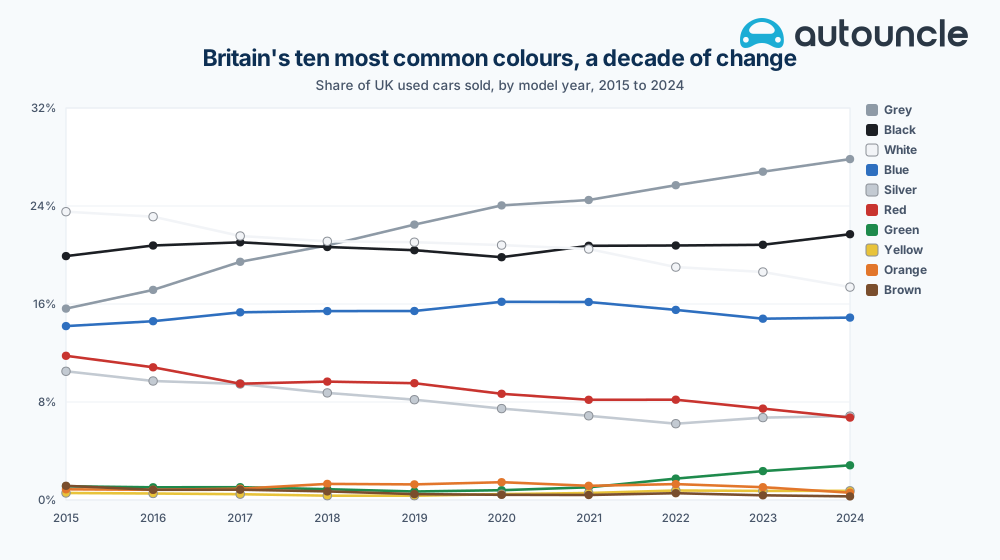
Grey has taken over Britain’s driveways. Across the whole used-car market it is now the single most common colour, at about 24% of listings, ahead of black (21%) and white (20%). The shift is sharper still among newer cars: looking at the same cars by the model year they were built, grey has climbed steadily from 16% of model-year-2015 cars to 28% of model-year-2024 cars. White has moved the other way, from 23% down to 17%, and red has fallen from 12% to 7%.
Source: AutoUncle, 14-market colour analysis, August 2026, autouncle.co.uk
Grey’s rise tracks the SUV boom
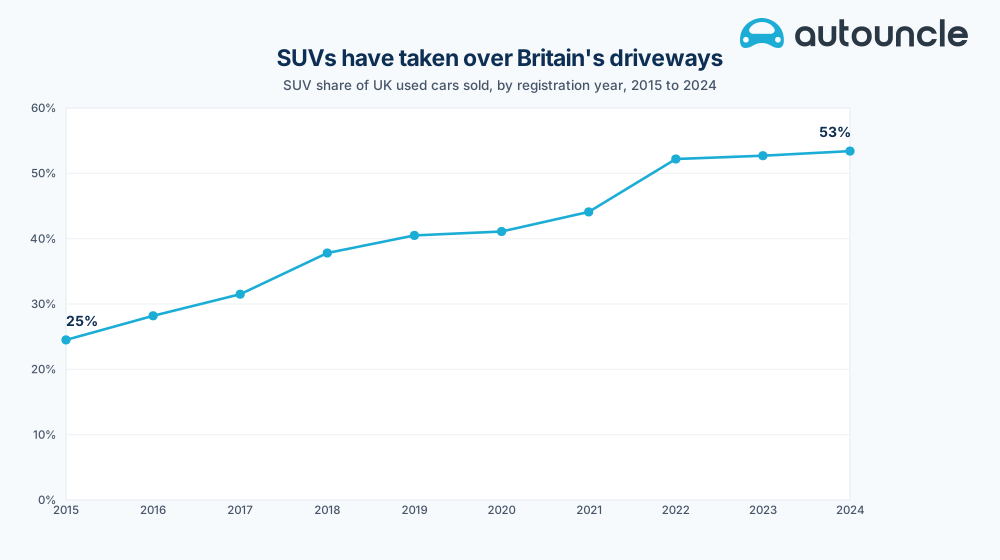
Part of grey’s rise turns out to be the SUV boom in disguise, since SUV buyers lean grey more than buyers of any other body style. SUVs made up about a quarter of UK used cars built in 2015; by 2024 that had grown to just over half. Body style and colour are not independent: grey is the single most common colour among SUVs specifically, at about 25%, while white still edges it out among every other body style, 23% to 20%. As SUVs have taken over a growing share of what Britain buys, they have pulled the overall colour mix toward grey along with them.
That is not the whole story: grey has grown within SUVs and other body styles too, so buyers are genuinely choosing it more, not just buying more SUVs that happen to come in grey - but the SUV shift is a real part of why its overall share has climbed so fast.
Source: AutoUncle UK, August 2025 to August 2026, autouncle.co.uk
Green is climbing fast, and brown is fading
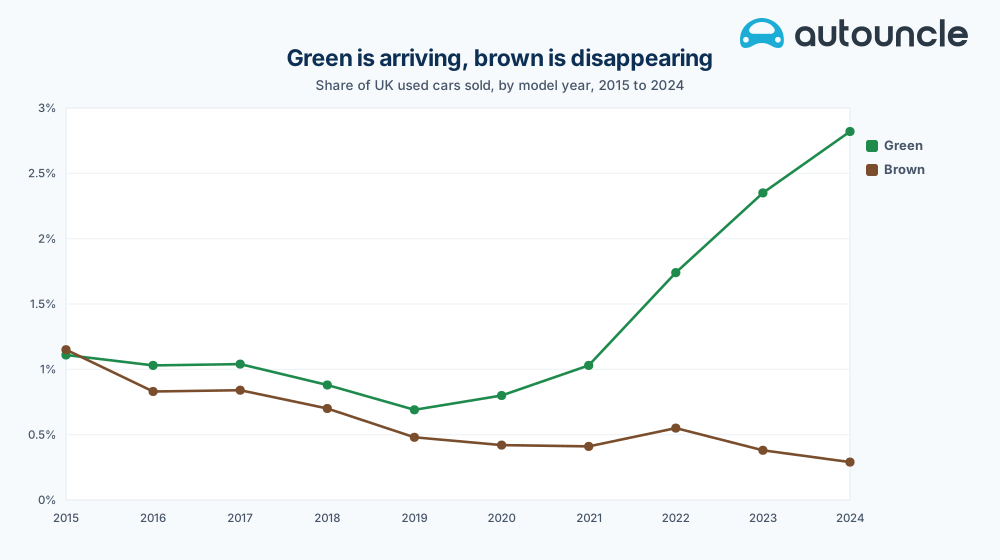
Grey’s rise is the headline trend, but the fastest mover in relative terms is green, more than doubling from about 1% to nearly 3% of model-year-2024 cars. Brown has gone the other way even more sharply, shrinking to roughly a quarter of its 2015 level.
Cars do not come in colours at random, and that split has a lot to do with what is underneath the paint. Among green cars, 15% are electric, the median model year is 2023, and the median car has covered about 9,800 miles. Among brown cars, only 2.8% are electric, the median model year is 2021, and the median car has covered about 22,400 miles. A green car in today’s market looks like a two-year-old electric SUV. A brown one looks like an older, higher-mileage petrol or diesel car - exactly the kind of car losing ground across the market.
Source: AutoUncle, 14-market colour analysis, August 2026, autouncle.co.uk
Does paying extra for colour when buying new pay off?
Colour preferences are shifting fast enough to reshape a market, which raises a practical question for anyone paying extra for a bolder choice: does that money come back at resale? Most manufacturers do not publish a clean, stable colour price list, which makes the question hard to test. Tesla does. Its paid colours are fixed, published prices - a clean test, except the price list itself has moved. On 9 April 2025 Tesla UK swapped its free colour from Pearl White to Stealth Grey, to keep the Model 3’s starting price under the £40,000 threshold that triggers a higher rate of vehicle tax. Almost all of the used Model 3s in this sample were ordered before that switch, when white was free and grey, black and blue each cost £1,300 more, red £2,000 more, so the table below prices each colour on that older list, not today’s.
Matching used Tesla Model 3s on model year and mileage band, every paid colour holds on to part of its premium, though unevenly.
| Colour | Premium when new | In the used price | Retained |
|---|---|---|---|
| Red | £2,000 | about +£810 | 41% |
| Grey | £1,300 | about +£480 | 37% |
| Black | £1,300 | about +£480 | 37% |
| Blue | £1,300 | about +£250 | 20% |
| White | free | — | — |
Red keeps the most of its premium, at 41%; grey and black each keep a little over a third; blue trails at 20%. None pays for itself, and on average only about a third of the original premium comes back. This is one model, not a rule for every car.
About the data
AutoUncle is the European standard for car valuations and price comparisons and aggregates used-car data from thousands of dealers across 14 European markets. This analysis is based on dealer listings for used cars in the UK, up to 10 years old at the time of sale, from August 2025 to August 2026, excluding new cars, leasing cars and private sales. The Tesla comparison matches used Model 3s by model year and a 20,000-mile mileage band, including only groups with at least 15 cars and 3 or more colours represented. New-car colour pricing for the Tesla table uses Tesla’s UK list prices as they stood before 9 April 2025, when most of the matched used cars were ordered; Tesla’s current list instead prices Stealth Grey free and Pearl White at £1,300.
Press contact
Mads Noergaard, Market Analyst, AutoUncle. mads.lauridsen@autouncle.com